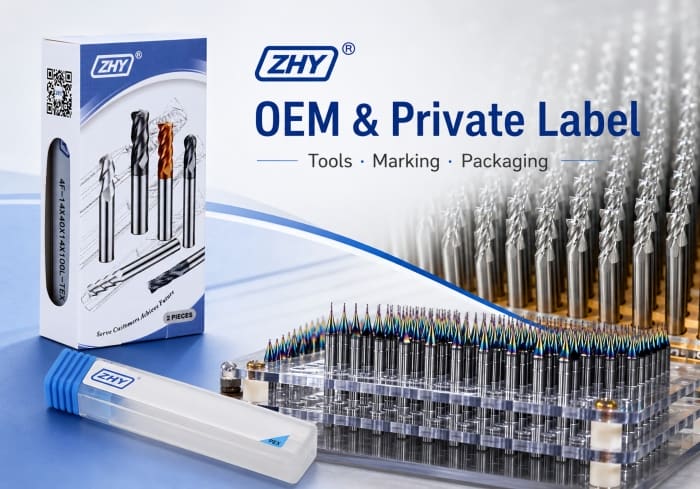
OEM & Private Label Cutting Tool Manufacturing at ZHY
September 4, 2026For a cutting tool distributor or private-label brand, sourcing a carbide end mill is different from purchasing tools for one machining job.
The product needs to fit an existing catalog, maintain a defined specification, carry the correct brand and model information, arrive in suitable packaging and remain consistent when the same item is ordered again.
This is where OEM and private-label manufacturing becomes more than a branding service.
At ZHY, OEM projects can combine standard carbide cutting tools, customized tool specifications, customer logo marking, model identification, labels, barcode information and private-label packaging according to the requirements of the project.
What Does OEM Mean for Cutting Tool Buyers?
In cutting tool purchasing, OEM can cover several different levels of cooperation.
Some customers already have an established product specification and only need a manufacturer to produce the tool with their logo and packaging.
Others may start with a ZHY standard end mill and request changes to the model number, label or package.
A more application-specific project may also require adjustments to the tool itself, such as diameter, cutting length, neck length, flute geometry, coating or special profile.
For this reason, an OEM cutting tool project can range from simple private labeling to a fully customized tool manufactured according to an approved drawing.
The first step is therefore to determine what actually needs to be customized.
Three Common Types of OEM Cutting Tool Projects
| OEM Project Type | Typical Requirement |
|---|---|
| Standard Tool + Private Label | Use an existing standard tool specification with customer logo, model number, label and packaging |
| Modified Standard Tool | Adjust dimensions, length, coating or selected geometry while retaining an established tool structure |
| Drawing-Based Custom Tool | Develop a special cutter according to a customer drawing, sample, component feature or machining requirement |
The correct route depends on the customer’s product strategy.
A distributor building a general-purpose carbide end mill range may be able to start from established standard tools. A customer serving a specific industry or component may need a modified or fully customized design.
Starting with the Tool Specification
Branding should come after the product specification is clear.
For each OEM item, the basic tool information normally needs to be confirmed first, including:
- Tool type
- Cutting diameter
- Cutting length
- Shank diameter
- Overall length
- Flute number
- Tool profile
- Workpiece material
- Coating requirement
- Quantity
For a ball nose or corner radius end mill, radius dimensions also need to be confirmed.
For long-neck or deep-reach tools, neck diameter, neck length and required reach become important.
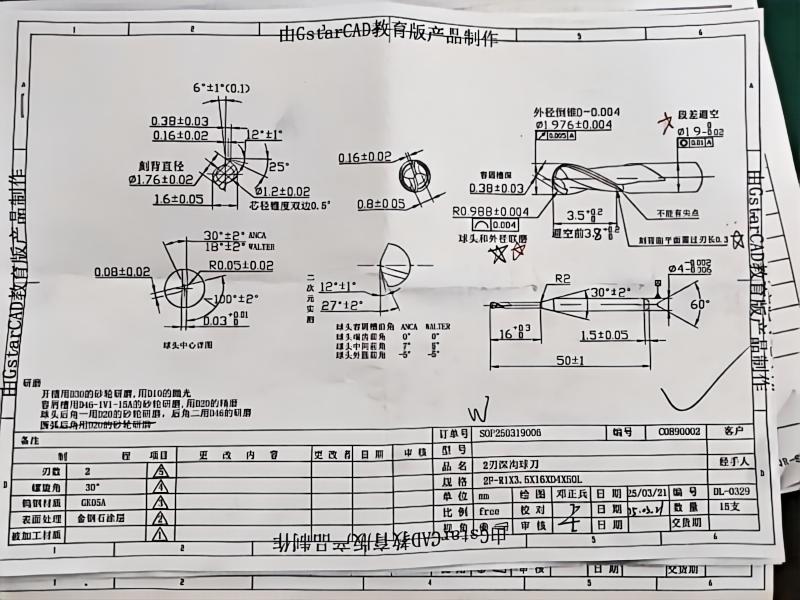
If the project involves a special profile or combined geometry, the customer can provide a drawing, existing tool drawing or component drawing for review.
This helps separate two questions that are sometimes mixed together:
What should the tool be?
and
How should the tool be branded?
The cutting tool specification must be stable before marking and packaging requirements are finalized.
Standard Tools Can Be a Practical Starting Point
Not every private-label project requires a new cutter design.
For distributors building a regular product range, an established tool structure can often provide a more practical starting point.
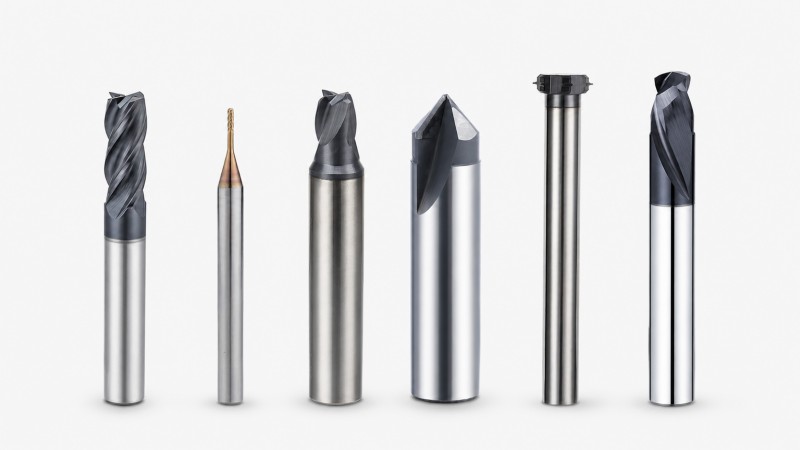
ZHY’s product range includes carbide end mills for carbon steel, mold steel, hardened steel, stainless steel, titanium, aluminum, graphite and other machining applications, together with square, ball nose and corner radius configurations.
Customers can review the current range through the ZHY Products page and then discuss which specifications are suitable for an OEM program.
Starting from an existing specification can be useful when the primary requirement is:
- Building a standard catalog
- Adding a new material-specific series
- Expanding diameter options
- Creating private-label stock
- Testing a new market before developing special tools
This also makes it easier to identify which parts of the product need to remain standard and which parts require customization.
When an OEM Project Needs a Custom Cutting Tool
Some OEM programs cannot be built entirely from standard products.
A customer may need a special cutter because of component geometry, machining depth, tool clearance, cycle-time requirements or an existing proprietary specification.
Customization may involve:
- Special cutting diameter
- Special cutting length
- Long-neck or reduced-neck geometry
- Extended reach
- Special radius
- Chamfer geometry
- Step geometry
- Form or profile cutting
- Special flute configuration
- Application-specific coating
Customer Logo and Model Number Marking
Once the product specification has been confirmed, the identification system can be defined.
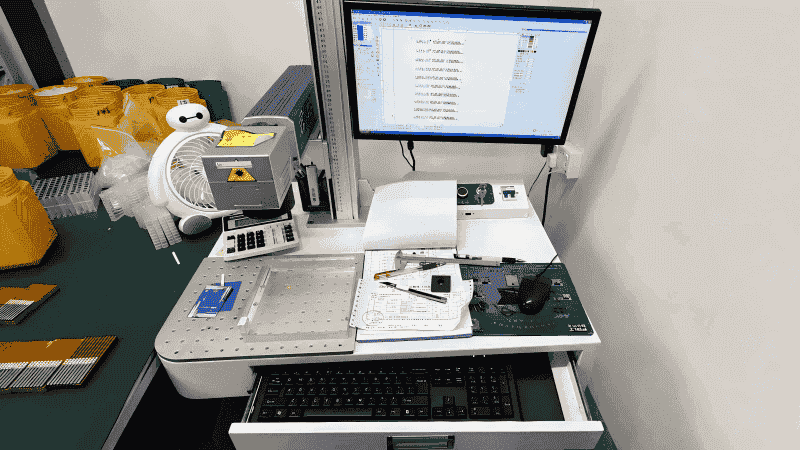
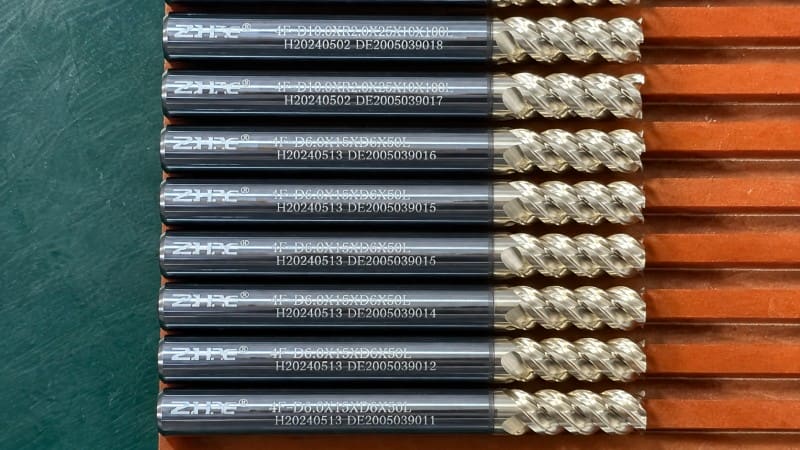
For private-label cutting tools, laser marking may include:
- Customer logo
- Brand name
- Customer model number
- Tool size
- Product code
- Other agreed identification
Model-number management is especially important for distributors because the same cutting tool may need to correspond with a catalog, quotation system, warehouse label and customer order code.
Before batch production, the marking position and content should therefore be confirmed together with the product specification.
Private-Label Labels and Packaging
The cutting tool is only one part of a private-label product.
Packaging also influences how efficiently the product can enter the distributor’s inventory and sales system.
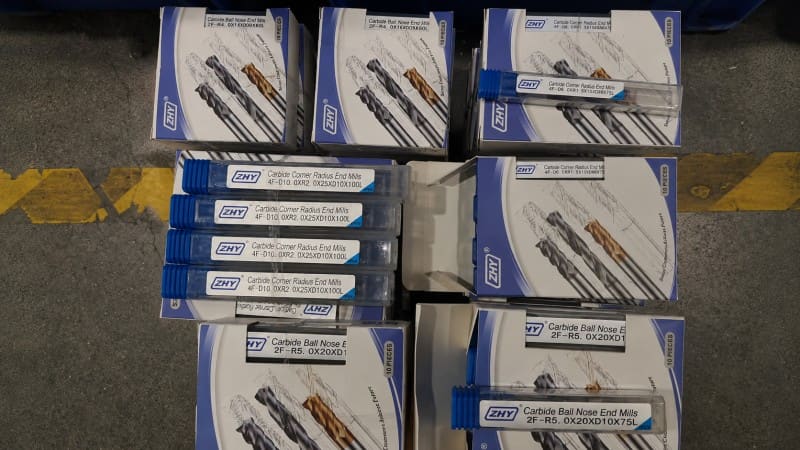
Depending on the project, private-label packaging can include:
- Product labels
- Customer model numbers
- Barcode stickers
- Plastic tool boxes
- Outer carton labels
- Customer brand information
- Other agreed packaging identification
For a distributor, correct packaging information reduces the need to relabel every item after receiving the shipment.
It also helps keep the physical product, inventory code and sales catalog aligned.
Samples and Prototype Tools Before Batch Production
For a new OEM project, moving directly into a large batch is not always necessary.
Depending on the tool and project requirements, a customer may first evaluate a standard sample or a custom prototype.
The evaluation can include:
- Dimensional verification
- Visual inspection
- Tool marking
- Packaging format
- Machining test
- Tool life
- Surface finish
- Chip evacuation
- Application suitability
For customized cutting tools, prototype evaluation is particularly useful before a specification becomes a repeat-production item.
The objective is to confirm the product before the approved specification becomes the basis for future orders.
From Sample Approval to Repeat Batch Supply
For a distributor, a successful sample is valuable only if the same product can be supplied again.
After an OEM specification has been confirmed, the approved tool dimensions, geometry, marking and packaging requirements provide the reference for repeat production.
A typical OEM project can therefore follow this process:
Requirement → Tool Selection / Design → Sample or Prototype → Approval → Branding Confirmation → Batch Production → Repeat Supply
| Stage | What Is Confirmed |
|---|---|
| 1. Requirement Review | Tool range, specification, workpiece material, quantity and OEM requirements |
| 2. Tool Selection / Design | Standard, modified standard or drawing-based customized tool |
| 3. Sample / Prototype | Tool dimensions, machining suitability and initial product verification |
| 4. Branding Confirmation | Logo, model number, label, barcode and packaging format |
| 5. Batch Production | Manufacturing according to the approved tool and OEM specification |
| 6. Repeat Supply | Future orders based on the confirmed product specification |
This process is particularly useful when a customer intends to build a product series rather than source a single isolated tool.
Mixed Sizes and Product Series Planning
Distributors often do not purchase only one diameter.
An OEM range may contain multiple diameters, lengths and tool types under one series.
For example, a carbide end mill range may include:
D1 / D2 / D3 / D4 / D6 / D8 / D10 / D12
together with square, ball nose and corner radius versions.
In this situation, it is useful to confirm the range as a complete product family rather than managing every item independently.
The customer can provide:
- Required diameter range
- Tool type
- Material application
- Product codes
- Packaging requirements
- Estimated quantity by size
- Expected repeat-order frequency
This helps both sides identify which specifications belong to the same series and which items require a different manufacturing or packaging approach.
OEM Does Not Mean Every Detail Must Be Customized
One common misconception is that a private-label tool must be completely redesigned.
In practice, unnecessary customization can make a product range more complicated without creating additional value.
A practical approach is to divide the project into three areas:
Keep Standard
Tool features that already match the required application.
Modify Where Needed
Dimensions, coating or geometry that need to match the target market or machining requirement.
Customize the Brand Presentation
Logo, model number, labels and packaging.
This helps keep the product technically appropriate while avoiding changes that do not improve the application.
What Information Should an OEM Buyer Send to ZHY?
To evaluate an OEM or private-label project, provide as much of the following information as possible:
- Required cutting tool type
- Workpiece material
- Diameter range
- Cutting length
- Overall length
- Flute number
- Tool profile
- Coating requirement
- Estimated quantity
- Customer logo file
- Model-number system
- Label requirements
- Barcode information
- Packaging requirements
- Existing catalog or specification sheet
- Tool or component drawing for custom products
You do not necessarily need every item before the first discussion.
However, the more clearly the product and branding requirements are defined, the easier it is to determine whether the project should use a standard tool, modified tool or customized design.
Who Is This Type of OEM Supply Suitable For?
OEM and private-label cutting tool supply can be particularly suitable for:
- Cutting tool distributors
- Industrial tool importers
- Regional wholesalers
- CNC tooling suppliers
- Private-label tool brands
- Machine-tool accessory companies
- Industrial suppliers expanding into carbide cutting tools
For these customers, the objective is usually not only to purchase a cutter but to build a product that can be identified, stocked, sold and reordered under an established product system.
Build Your Cutting Tool Range with ZHY
ZHY supports standard carbide cutting tools, drawing-based custom tools and OEM/private-label manufacturing for distributors and industrial cutting tool brands.
A project can begin with an existing product range, a customer’s current specification or a completely new custom-tool requirement.
Explore the current ZHY Products, review our Custom End Mill Solutions, or learn more about the ZHY manufacturing facility.
To discuss an OEM project, send your required product range, tool specifications, quantities, logo and packaging requirements through the ZHY contact page.