Helix Angle in Carbide End Mills: How It Affects Cutting Performance
September 8, 2026Carbide end mills are designed with many geometric features that determine their cutting performance. While tool diameter, flute number, coating and material are often considered during tool selection, the helix angle is another important factor that affects how the cutting edge interacts with the workpiece.
For CNC machining applications, selecting the appropriate helix angle can influence cutting stability, chip evacuation, surface finish and tool life. Understanding this basic tool geometry helps users choose more suitable carbide end mills for different materials and machining conditions.
Understanding Helix Angle in Carbide End Mills
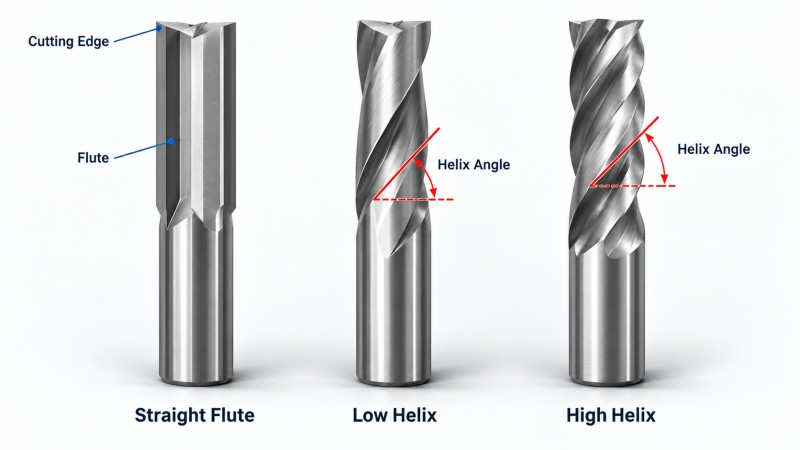
Helix angle is a fundamental geometric feature of a carbide end mill that determines the angle of the cutting edge as it rotates around the tool body.
It refers to the angle between the cutting edge of the flute and the center axis of the end mill.
Unlike straight flute cutters where the cutting edge is parallel to the tool axis, carbide end mills usually use helical flutes. This spiral design allows the cutting edge to enter and exit the workpiece more gradually during machining.
The helix angle affects several important cutting characteristics, including:
- Cutting force
- Chip evacuation
- Cutting stability
- Surface finish
- Cutting edge strength
Different helix angles are designed to achieve different balances between smooth cutting performance and tool rigidity.
How Helix Angle Affects Cutting Performance
Cutting Force and Cutting Stability
The helix angle directly affects how the cutting edge engages with the workpiece.
A higher helix angle creates a smoother cutting action because the cutting edge gradually enters the material instead of engaging the entire cutting edge at once. This can reduce cutting impact and improve machining stability.
For applications requiring better surface quality or reduced vibration, an optimized helix angle can help achieve smoother cutting performance.
However, a higher helix angle may reduce the cross-sectional strength of the cutting edge. For heavy cutting applications, a lower or standard helix design may provide better rigidity.
Chip Evacuation Performance
Efficient chip evacuation is essential for stable CNC machining.
During cutting, chips must be removed quickly from the machining area. If chips remain in the cutting zone, they may be recut, increasing:
- Cutting temperature
- Tool wear
- Material adhesion
- Risk of tool failure
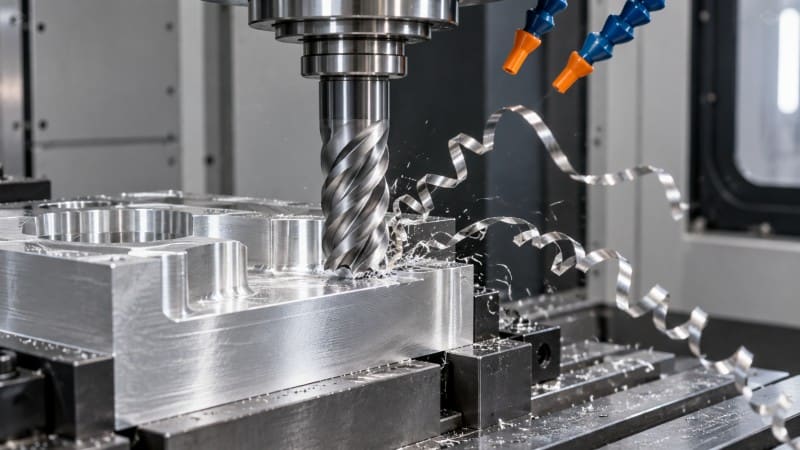
High helix end mills generate a stronger chip-flow effect, which helps move chips away from the cutting area.
This makes high helix designs especially suitable for materials that produce long chips, such as aluminum alloys.
Surface Finish and Machining Quality
The helix angle also influences the final surface quality of the machined part.
A suitable helix design allows smoother cutting engagement and reduces sudden cutting forces, helping improve surface finish.
However, surface quality is also affected by other factors, including:
- Tool rigidity
- Machine condition
- Tool runout
- Cutting parameters
- Tool overhang
Therefore, helix angle should always be considered as part of the complete tool design rather than as an independent factor.
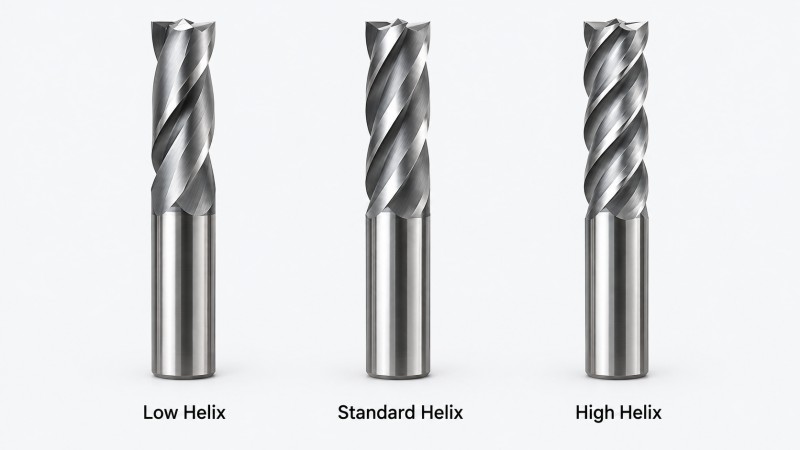
Low Helix vs Standard Helix vs High Helix End Mills
Different helix angles provide different advantages depending on machining requirements.
| Helix Type | Characteristics | Typical Applications |
|---|---|---|
| Low Helix | Strong cutting edge, higher rigidity and better resistance to heavy cutting loads | Hard materials, stable cutting and applications requiring stronger edges |
| Standard Helix | Balanced cutting force, rigidity and chip evacuation | General CNC milling applications |
| High Helix | Smoother cutting action and improved chip evacuation | Aluminum, non-ferrous materials and finishing operations |
High Helix End Mills for Aluminum Machining
Aluminum machining is one of the most common applications where high helix end mills are used.
Compared with many steel materials, aluminum is softer and more likely to generate long chips and material adhesion during machining.
A high helix design can provide several advantages:
- Better chip evacuation
- Reduced cutting resistance
- Lower risk of material buildup on the cutting edge
- Improved surface finish
For aluminum applications, helix angle should also be considered together with flute number and cutting edge geometry.
For example, a two-flute high helix end mill provides larger chip space, making it suitable for high-speed aluminum machining where efficient chip removal is required.
ZHY provides carbide end mills designed for different aluminum machining applications. More product information can be found through the ZHY Products page.
Helix Angle Selection for Different Materials
There is no single helix angle that is suitable for every machining application.
The correct choice depends on balancing:
- Cutting edge strength
- Chip evacuation requirements
- Material characteristics
- Machining stability
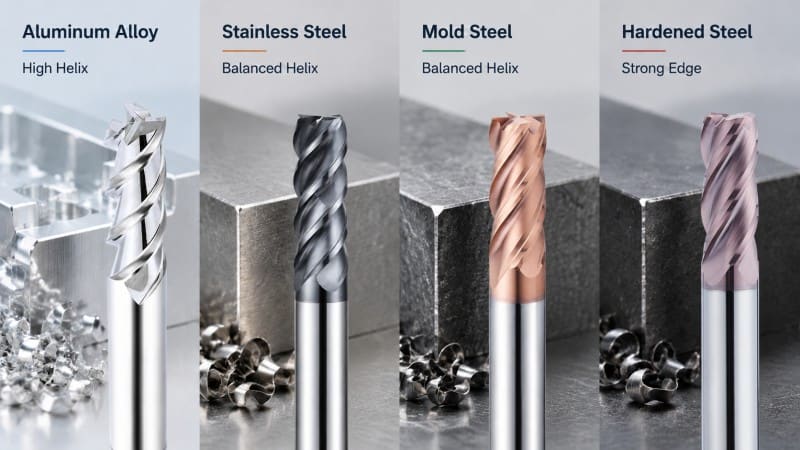
| Workpiece Material | Helix Angle Consideration |
|---|---|
| Aluminum Alloy | Higher helix angle for better chip evacuation and smoother cutting |
| Stainless Steel | Balanced helix design for stability and controlled cutting force |
| Mold Steel | Standard helix for balanced strength and machining performance |
| Hardened Steel | Optimized helix angle to maintain cutting-edge strength |
Helix Angle and Flute Number Work Together
Helix angle should not be selected separately from flute number.
The combination of flute number and helix angle determines the balance between chip space, tool rigidity and cutting performance.
For example:
A two-flute high helix end mill provides excellent chip evacuation and is commonly used for aluminum machining.
A three-flute high helix end mill offers a balance between productivity, chip removal and cutting stability.
A four-flute standard helix end mill provides higher rigidity and is often suitable for steel machining and finishing operations.
For more information about flute selection, you can read: 2-Flute vs 3-Flute vs 4-Flute End Mills
Common Mistakes When Selecting Helix Angle
Choosing Only by Tool Diameter
Tool diameter is important, but it does not determine complete cutting performance.
Two end mills with the same diameter may behave differently because of differences in helix angle, flute geometry and cutting-edge design.
Assuming Higher Helix Is Always Better
A higher helix angle can improve chip evacuation and cutting smoothness, but it is not suitable for every application.
Heavy cutting and hard material machining often require stronger cutting-edge support and higher tool rigidity.
Ignoring the Complete Tool Geometry
Helix angle should always be considered together with:
- Flute number
- Coating
- Tool diameter
- Tool length
- Workpiece material
- Machining operation
A balanced tool design is more important than selecting one parameter individually.
How to Select the Right Helix Angle for Your Application
When selecting a carbide end mill, users should consider the complete machining condition.
Important factors include:
Workpiece Material
Different materials require different balances between sharpness, strength and wear resistance.
Machining Operation
Roughing, semi-finishing and finishing operations may require different helix designs.
Chip Evacuation Requirements
Materials producing long chips usually benefit from designs with improved chip flow.
Tool Rigidity Requirements
Deep machining applications with longer tool overhang may require stronger tool structures.
Surface Finish Requirements
Finishing operations often benefit from smoother cutting engagement and stable tool performance.
Conclusion
Helix angle is an important part of carbide end mill geometry that influences cutting force, chip evacuation, vibration control and machining stability.
High helix end mills are often suitable for applications requiring efficient chip removal, such as aluminum machining, while standard and lower helix designs may provide better rigidity for demanding cutting conditions.
The best carbide end mill selection requires considering helix angle together with flute number, coating, tool geometry, workpiece material and machining requirements.
By understanding how helix angle affects cutting behavior, users can select more suitable carbide end mills and achieve more stable CNC machining performance.
Explore the complete range of ZHY carbide cutting tools for different CNC milling applications.