
Description
Product Overview
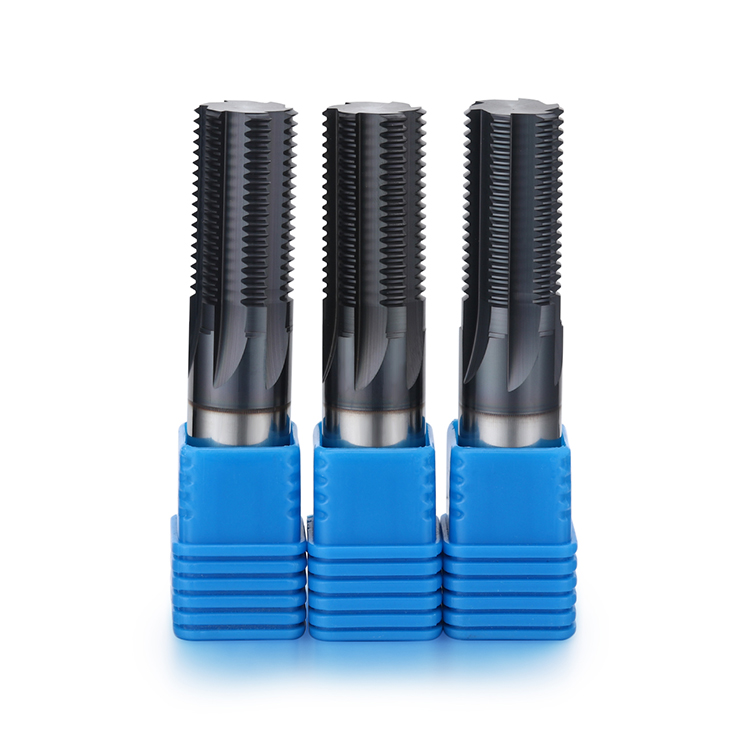
This solid carbide full-profile thread mill is designed
for precision machining of internal threaded holes using
CNC helical interpolation.
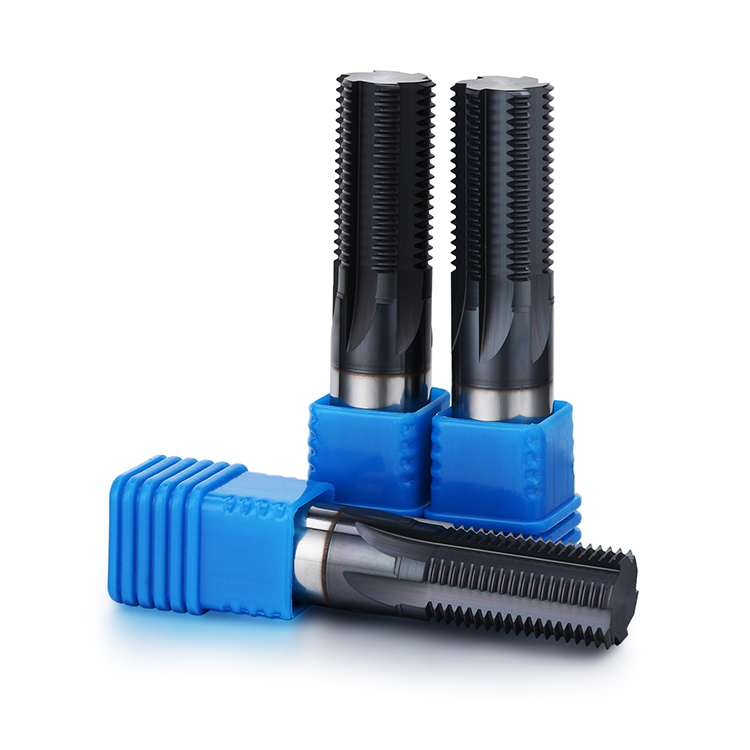
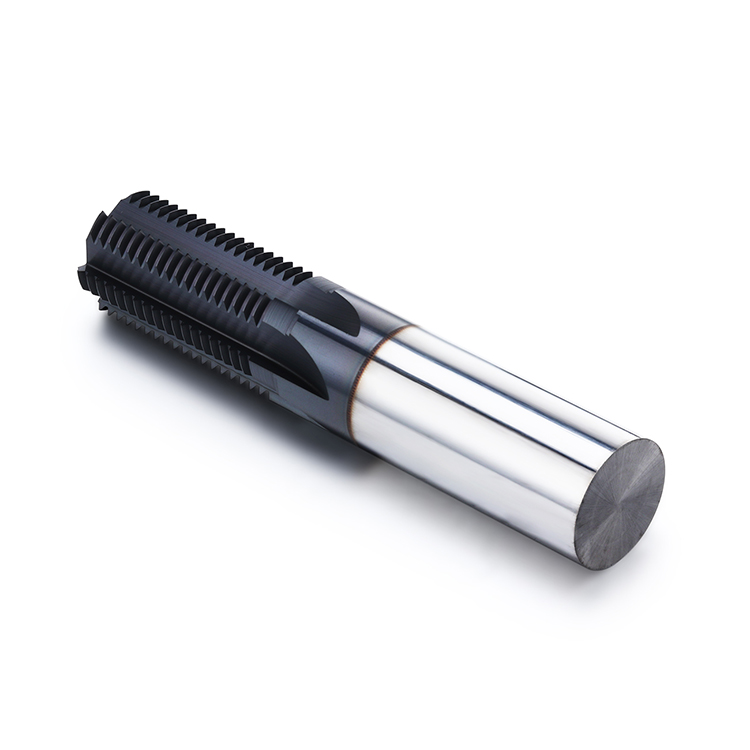
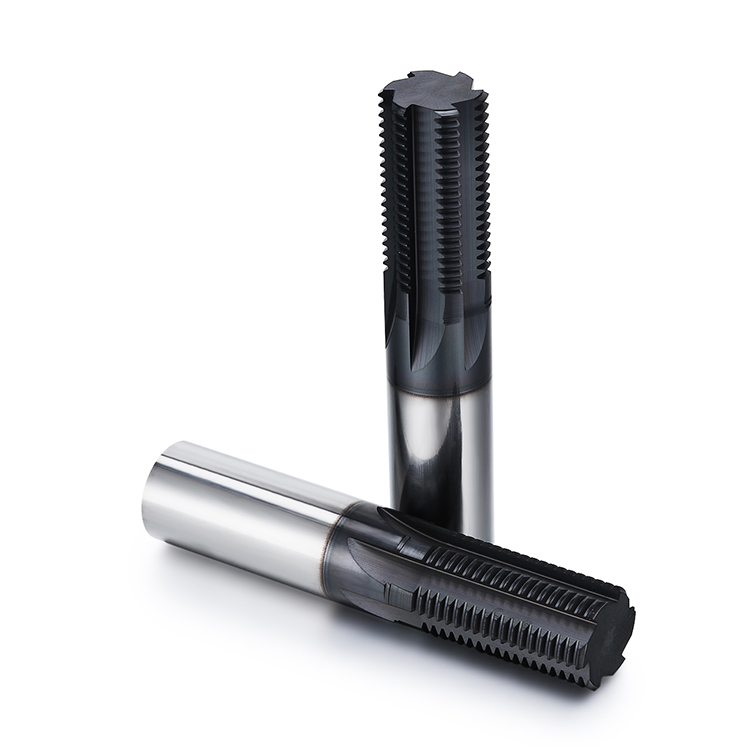
The cutting section contains multiple thread-form teeth
corresponding to a specified thread pitch. When the cutter
geometry and cutting length match the application, the tool
can machine the required threaded length through a controlled
circular and axial interpolation movement.
Recommended Thread Milling Applications
Full-profile thread mills are suitable for CNC machining
applications requiring controlled thread diameter,
programmable compensation and consistent thread quality.
Internal Thread Milling
Produces internal threads in a pre-machined hole
using circular interpolation combined with
controlled axial movement.
Blind Threaded Holes
Suitable for blind-hole threading when the cutter
length, bottom clearance and programmed toolpath
are correctly matched.
Through Threaded Holes
Supports through-hole thread machining with
controlled entry, interpolation and chip evacuation.
Custom Thread Profiles
Drawing-based cutters can be developed for
non-standard pitch, diameter, thread form
and effective thread length.
What Is a Full-Profile Thread Mill?
A full-profile thread mill contains the complete cutting
form required for a specified thread profile and pitch.
Multiple teeth are arranged along the cutting section
to generate the programmed threaded length.
Full-Profile Cutting Section
- Cutting teeth correspond to a specified thread pitch
- Profile geometry matches the required thread form
- Multiple axial teeth improve threading productivity
- Cutting length must cover the required thread depth
- Profile and pitch must match the component drawing
- Special thread forms require dedicated tool geometry
Programmable Thread Diameter
- Thread diameter is controlled by the interpolation path
- Toolpath compensation can adjust the finished diameter
- One pitch may cover several compatible thread diameters
- Minimum thread diameter depends on cutter diameter
- Thread fit should be verified with a gauge
- Program adjustment must remain within tool limits
How CNC Thread Milling Works
The hole is drilled or bored before thread milling.
The cutter enters the prepared hole and follows a circular
path while moving axially by the required thread pitch.
Thread Milling vs Tapping
Both processes produce internal threads, but they use
different cutting movements and tool-selection methods.
Full-Profile Thread Mill
- Uses CNC helical interpolation
- Requires a pre-machined hole
- Thread diameter can be adjusted through programming
- One pitch may machine compatible diameter variations
- Produces smaller, more manageable chips
- Requires a CNC capable of circular interpolation
Conventional Tap
- Feeds axially into the prepared hole
- Normally corresponds to one nominal thread size
- Thread diameter is mainly determined by tap geometry
- Requires correct synchronization or tapping cycle
- Chip control depends on tap style and hole type
- May be faster for suitable high-volume applications
Full-Profile Thread Mill Design and Performance
Thread profile, pitch, cutter diameter, cutting length,
carbide grade, flute geometry and coating must be selected
together according to the component and workpiece material.
Solid Carbide Construction
Solid carbide provides the rigidity, wear resistance
and dimensional stability required for precision
thread milling operations.
Full Thread Profile
The cutting geometry reproduces the required thread
form according to the specified standard, pitch
or customer drawing.
Multi-Tooth Cutting Section
Multiple thread-form teeth along the cutting section
support productive machining of the programmed
thread length.
Pitch-Specific Geometry
A standard full-profile cutter is normally designed
for one specified thread pitch and matching
thread-form geometry.
Programmable Diameter Control
The finished thread diameter can be adjusted through
the CNC interpolation radius and tool-wear
compensation.
Blind and Through Holes
Suitable cutter configurations can be used for
blind or through holes when depth, clearance
and chip evacuation are properly controlled.
Controlled Thread Fit
Toolpath compensation allows the finished thread
diameter to be adjusted after inspection with
the appropriate thread gauge.
Manageable Chip Formation
The milling process forms smaller chip sections,
supporting chip evacuation in suitable internal
threading applications.
Custom Thread Profile
Metric, unified or special profiles can be evaluated
according to the thread drawing, pitch,
tolerance and component requirement.
Custom Cutting Length
The number of cutting teeth and effective cutting
length can be developed according to the required
thread depth.
Application-Specific Coating
Carbide grade and coating can be selected according
to the workpiece material, hardness, cutting speed
and coolant condition.
Drawing-Based Customization
Thread profile, pitch, cutter diameter, cutting
length, neck, shank and overall length can be
developed according to customer drawings.
Available Workpiece Material Applications
Different workpiece materials require different carbide
grades, cutting-edge geometries and coatings. Material
compatibility must be confirmed before ordering.
Hardened steel, titanium alloys, nickel-based alloys
and other difficult-to-machine materials require
a separately selected carbide grade, coating and
cutting configuration.
Available Thread Mill Configurations
The final thread profile and cutter dimensions should
be confirmed from the thread drawing, prepared-hole
diameter and required effective thread depth.
| Tool Type | Solid Carbide Full-Profile Thread Mill |
|---|---|
| Alternative Names | Full-Form Thread Mill / Multi-Tooth Thread Mill |
| Tool Material | Solid Carbide |
| Primary Application | Internal Thread Milling |
| Machining Method | CNC Helical Interpolation |
| Cutting Profile | Full Thread Profile |
| Thread Pitch | One Specified Pitch per Standard Full-Profile Tool Unless Otherwise Confirmed |
| Thread Standard | Confirm According to Selected Tool or Customer Thread Drawing |
| Thread Diameter | Controlled by Cutter Geometry, Prepared Hole and CNC Toolpath |
| Thread Length | Standard or Customized According to Effective Cutting Length |
| Hole Type | Blind Hole / Through Hole |
| Coolant Method | External Coolant / Air Blast / Custom Coolant Configuration |
| Coating | Selected According to Workpiece Material, Hardness and Machining Conditions |
| Custom Options | Thread Profile / Pitch / Cutter Diameter / Cutting Length / Neck / Shank / Overall Length / Coating |
| OEM Options | Laser Marking / Customer Model Number / Custom Label / Private-Label Packaging |
Do not order a full-profile thread mill only by nominal
thread diameter. Please also confirm thread standard,
pitch, tolerance, hole type, thread depth and
prepared-hole diameter.
Thread Mill Selection Guidelines
Correct selection requires more than the nominal thread
diameter. Thread pitch, thread form and effective cutting
length must all match the application.
Confirm the Thread Specification
- Nominal thread diameter
- Thread standard and profile
- Thread pitch or threads per inch
- Internal thread tolerance class
- Right-hand or left-hand thread requirement
- Standard or special thread form
Confirm the Hole and Tool Dimensions
- Prepared-hole diameter
- Blind or through-hole configuration
- Required effective thread depth
- Available bottom clearance
- Required shank diameter and overall length
- Holder, shank and component interference
Recommended Thread Milling Method
Thread accuracy and tool life depend on the prepared hole,
CNC program, tool runout, cutting engagement, chip evacuation
and workpiece material.
Recommended Setup
- Prepare the hole to the confirmed diameter
- Use rigid workholding and a low-runout holder
- Confirm cutter diameter and thread pitch in the program
- Use controlled circular entry and exit movements
- Provide effective chip evacuation
- Inspect the first thread with the correct gauge
Conditions Requiring Attention
- Incorrect prepared-hole diameter
- Incorrect thread pitch in the CNC program
- Cutting length shorter than the required thread depth
- Excessive tool runout
- Poor chip evacuation in blind holes
- Excessive diameter compensation in one adjustment
Thread Inspection and Diameter Adjustment
The first machined thread should be inspected before
batch production. Diameter correction can then be made
through controlled CNC toolpath compensation.
Recommended Inspection
- Use the specified GO and NO-GO thread gauge
- Check thread depth and effective length
- Inspect the thread entrance and bottom area
- Confirm the finished thread surface
- Check for remaining chips or burrs
- Record the confirmed production offset
Toolpath Compensation
- Adjust the interpolation radius gradually
- Do not change the programmed thread pitch
- Compensate for measured tool wear when required
- Reinspect the thread after offset adjustment
- Monitor thread fit during batch production
- Replace the tool before profile wear becomes excessive
Custom Full-Profile Thread Mill Options
Non-standard thread mills can be developed according
to the thread drawing, hole geometry, component material
and available machine conditions.
Information Required for Tool Selection
Complete thread and machining information helps prevent
incorrect pitch, insufficient cutting length and
interference between the cutter and the prepared hole.
Thread and Component Information
- 2D thread drawing or complete component drawing
- Nominal thread size
- Thread standard, profile and pitch
- Thread tolerance class
- Blind or through-hole requirement
- Required effective thread depth
Machining Information
- Workpiece material and hardness
- Prepared-hole diameter
- Machine and CNC control type
- Toolholder and measured runout
- Coolant or air-blast condition
- Production quantity and current machining method
Custom Thread Mill Development Process
Custom cutter geometry is developed according to
the required thread profile, pitch, depth,
workpiece material and CNC machining process.
Solid Carbide Thread Mill Manufacturer
ZHY supplies standard and drawing-based carbide thread
mills to precision machining companies, automotive suppliers,
aerospace manufacturers, mold companies, distributors
and private-label cutting-tool brands.
Application and Production Support
- Thread drawing and pitch review
- Full-profile thread geometry development
- Standard and custom cutting lengths
- Material-specific carbide and coating selection
- Prototype tools for thread verification
- Standard and custom batch production
OEM and Private Label
- Customer logo laser marking
- Customer model and product numbers
- Thread specification marking
- Custom labels and barcode stickers
- Private-label packaging support
- Packaging verification before shipment
Production and Quality Inspection
Thread profile, pitch, cutter diameter, cutting length,
flute geometry and cutting-edge appearance are inspected
to support repeatable thread milling performance.
Explore More Custom End Mills
View additional special-purpose and drawing-based
carbide milling cutters for precision component machining.
Request a Thread Mill Recommendation
Send us the thread drawing, nominal thread size,
thread standard, pitch, tolerance class, effective
thread depth, prepared-hole diameter, workpiece material,
machine information and order quantity. Our team will
review the application and recommend a suitable standard
or customized solid carbide full-profile thread mill.