Micro Diameter
End Mills
ZHY manufactures solid carbide micro diameter end mills for narrow slots, miniature cavities and fine contours. Square and ball nose cutting diameters start at 0.10 mm, with corner radius tools and custom geometries available for your drawing.

From Ø0.10 mm
Standard square & ball sizes
Three profiles
Square · Ball nose · Corner radius
Solid carbide
Material-specific configurations
Custom dimensions
Drawing-based manufacture
Home / Carbide End Mills / Micro Diameter End Mills
Micro End Mills by Cutting Profile
Match the tool end to the floor, wall or contour you need to machine. Our miniature carbide end mills include square, ball nose and corner radius profiles, with geometry and coating selected for the workpiece.

Flat floors and slots
Micro Diameter Square End Mills
Flat-end cutters for narrow slots, small pockets and detailed side walls. Standard cutting diameters run from 0.10 to 0.90 mm.
Ø0.10–0.90 mm
Flat-end profile

Curved miniature features
Micro Diameter Ball Nose End Mills
Miniature ball end mills for small curved surfaces, fillets and 3D contours. Standard ball radii run from R0.05 to R0.45 mm.
R0.05–R0.45 mm
Full ball profile

Radiused transitions
Micro Diameter Corner Radius End Mills
Flat-center cutters with rounded cutting corners for small shoulders and floor-to-wall transitions. Specify the cutting diameter and corner radius together.
Corner radius to drawing
Flat-center profile
2-flute and 4-flute configurations are available. Steel and aluminum options use material-specific cutting geometries and surface configurations.
Steel and mold steel
The listed steel geometry uses TiAlSiN coating for workpieces up to 60 HRC. State the actual grade and hardness when requesting a tool.
Aluminum and non-ferrous workpieces
Separate aluminum geometries are available. Match the cutting edge, chip space and surface configuration to the alloy and machining operation.
Standard Micro End Mill Sizes
All dimensions are in millimeters. Select the cutting profile below to view the complete listed combinations. Ball nose sizes are given by radius R; the cutting diameter is D = 2R.

D Cutting diameter Lc Flute length d Shank diameter L Overall length
Cutting Ø D
(mm)Flute length Lc
(mm)Shank Ø d
(mm)Overall length L
(mm)
0.100.2450
0.150.3450
0.200.4450
0.250.5450
0.300.6450
0.350.7450
0.400.8450
0.450.9450
0.501.0450
0.551.1450
0.601.2450
0.651.3450
0.701.4450
0.751.5450
0.801.6450
0.851.7450
0.901.8450
The listed square and ball nose combinations use a 4 mm shank and 50 mm overall length. For another cutting size, flute length, reach or shank, send your drawing. Coating and flute configuration are selected with the workpiece material.
Need cutting conditions for a small feature?
Send the material grade, hardness, cutting diameter, flute length, holder and machining operation.
Micro End Milling: Setup Matters
Small diameter end mills need close control of toolholding, cutting contact and chip removal. Use the actual cutting diameter and feature geometry when choosing the setup.
Runout at the cutting tip
Check the spindle, collet and assembled tool close to the cutting section. Runout can make one flute carry more of the cut, especially when the programmed chip load is small.
Short cutting length and overhang
Use the shortest cutting length and projection that clear the feature. For a deeper cavity, specify effective reach and neck clearance rather than extending an ordinary micro cutter.
Chip removal and entry
Direct coolant or air to the small cutting zone and clear chips before they are cut again. Match entry, axial depth and radial engagement to the tool and workpiece.
For recessed features, compare our long neck end mills. Small diameter describes cutting size; long neck describes the clearance and reach behind the cutting edge.
Grinding and Inspection for Small Cutting Edges
ZHY is a micro end mill manufacturer supplying standard and drawing-based solid carbide tools. Our factory combines CNC tool grinding, coating equipment and optical profile inspection for small cutting edges.
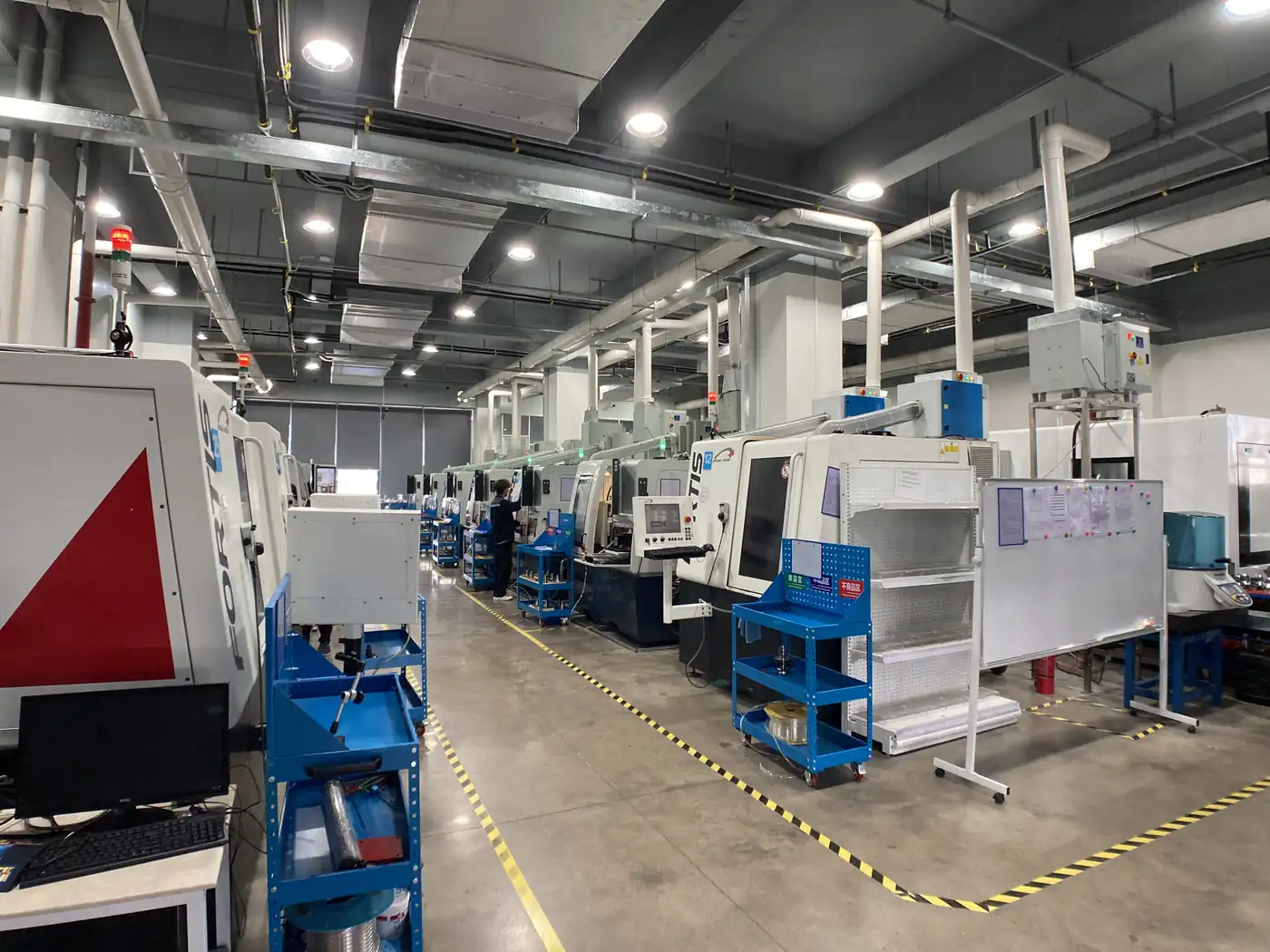
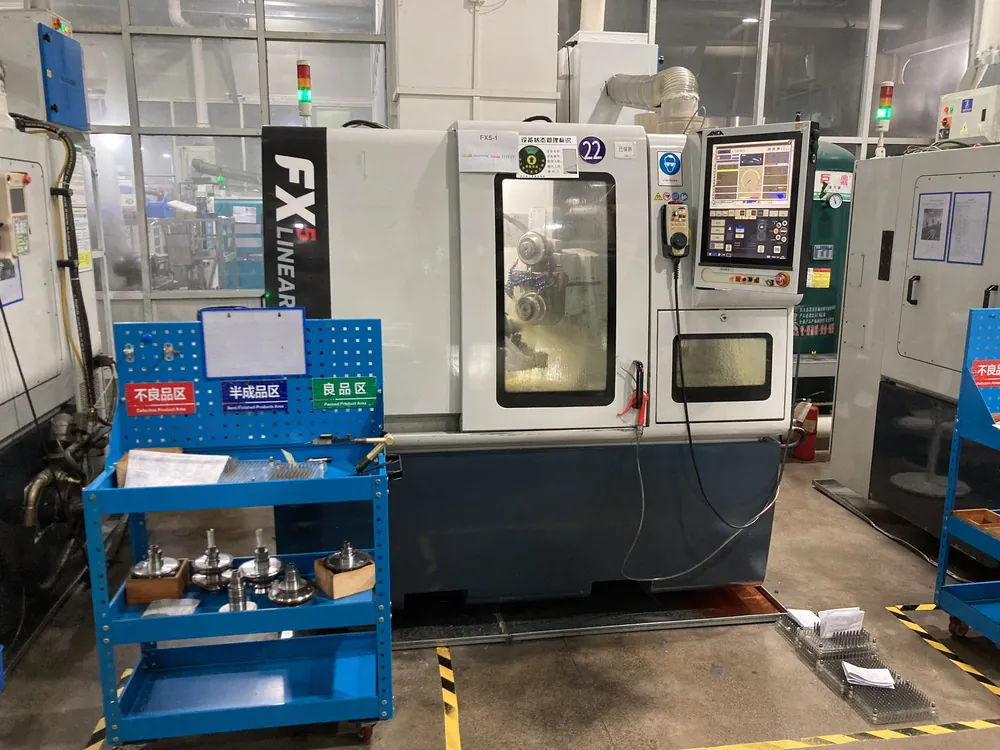
CNC tool grinding
The cutting diameter, end profile, flute length and transition geometry are ground for the selected tool configuration.
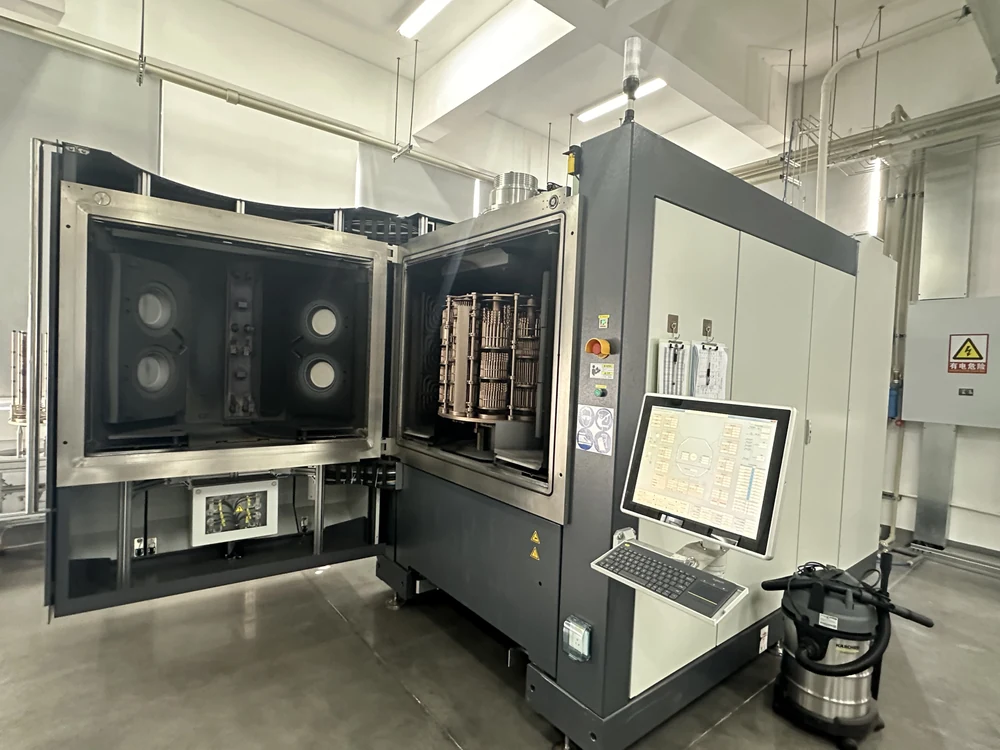
Material-specific surfaces
Steel and aluminum cutting tools use different edge and surface configurations. Select the coating with the workpiece grade and machining operation.
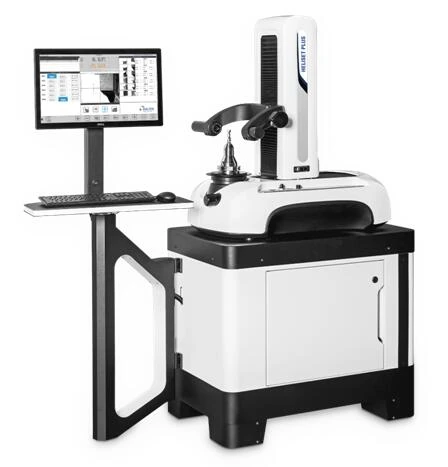
Optical profile inspection
Profile measurement and magnified inspection check the cutting edge, end radius and visible edge condition. Specify critical tolerances on your tool drawing.
Custom Micro End Mills and OEM Supply
Send the feature and tool drawings for custom miniature end mills. We can discuss cutting diameter, end profile, flute length, neck clearance and shank dimensions, with customer marking and private-label packaging for repeat orders.
Cutting size and profile
Diameter, ball or corner radius, flute count and critical profile tolerances
Cutting length and access
Flute length, effective reach, neck diameter, shank and overall length
Workpiece and process
Material grade, actual hardness, feature size, holder and machining operation
Order and identification
Quantity per size, repeat-order needs, tool marking and packaging
Micro End Mills FAQ
What standard micro diameters are available?
The listed square tools cover Ø0.10 to Ø0.90 mm. Ball nose tools cover R0.05 to R0.45 mm, equivalent to cutting diameters of Ø0.10 to Ø0.90 mm. Complete size combinations are shown above; other dimensions are discussed to drawing.
Can I use these micro end mills on steel around 58 HRC?
The listed steel series is intended for steel and mold steel up to 60 HRC, which includes 58 HRC workpieces. Select the end profile, carbide grade, coating and cutting conditions for the actual steel grade and operation; the aluminum geometry is a separate option.
Does R0.10 mean a 0.10 mm ball cutting diameter?
No. R0.10 is the ball radius, so the full cutting diameter is Ø0.20 mm. State whether a requested size is a radius or diameter when ordering a micro carbide ball end mill.
Why can a micro end mill break even at a low feed rate?
Runout, chip recutting, excessive engagement or a collision can overload a small cutting edge. A very small programmed feed can also lead to rubbing. Check the toolholding, actual chip load and toolpath before simply reducing feed again.
Is a micro end mill the same as a long neck end mill?
Micro refers to the small cutting diameter. Long neck refers to the reduced clearance section behind the cutting edge. A tool can have both features; choose the cutting size and required reach separately for a recessed feature.
Can ZHY make special micro end mill dimensions?
Yes. Send the cutting diameter, end profile or radius, flute length, required reach, shank size and overall length with the material and quantity. We quote custom geometry and OEM identification through Custom Tooling.
What spindle speed and feed should I use for micro end mills?
Cutting conditions depend on the actual cutting diameter, workpiece grade and hardness, flute count, toolholding and toolpath. Send these details with the required flute length and reach for cutting advice. For micro carbide end mills, assess spindle runout and chip removal together with speed and feed; reducing feed alone does not resolve every cutting problem.
Are micro end mill bits and miniature end mills the same?
Micro end mill bits is another search term for miniature end mills. When requesting a carbide micro end mill, specify the cutting diameter, end profile, flute length, workpiece and required reach. These details identify the tool more precisely than the name alone.