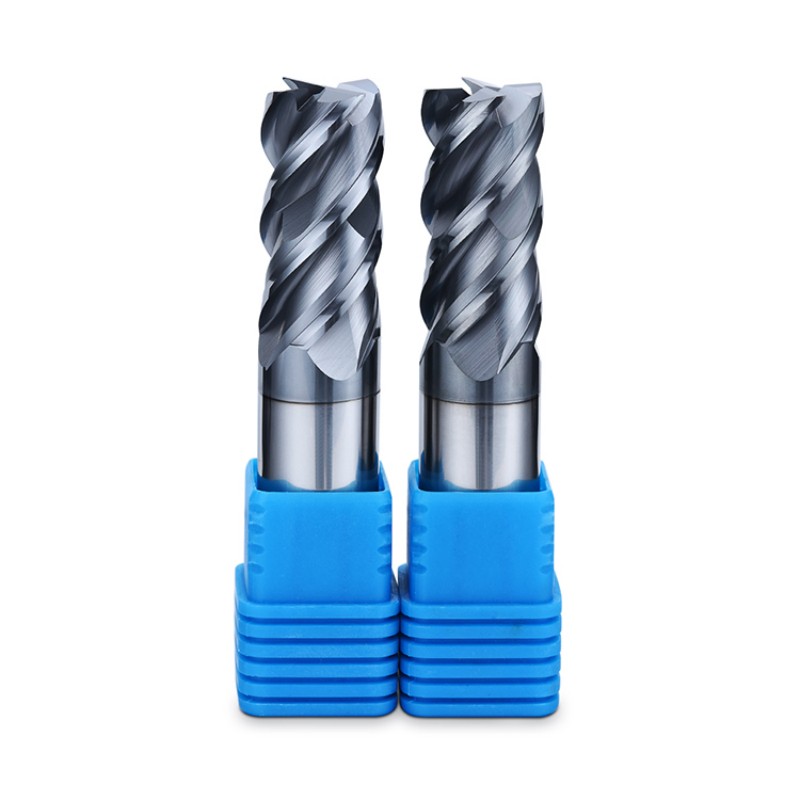
Carbide Square End Mill for Stainless Steel
Suitable for dynamic milling, side milling, slotting, shoulder machining and flat-bottom cutting of stainless steel components.
Request SpecificationsZHY carbide end mills for stainless steel are designed for roughing, dynamic milling, side machining and semi-finishing applications where chip evacuation, cutting stability and resistance to built-up edge are important.
The range combines an ultra-fine carbide substrate, 12% cobalt, Balzers AP AlCrN coating, 52%/70% dual-core geometry, an 8° positive rake angle, a 45° helix and 88°/92° unequal end-tooth division.
Select square, ball nose or corner radius end mills according to the workpiece feature, machining operation and required surface geometry.
Suitable for dynamic milling, side milling, slotting, shoulder machining and flat-bottom cutting of stainless steel components.
Request Specifications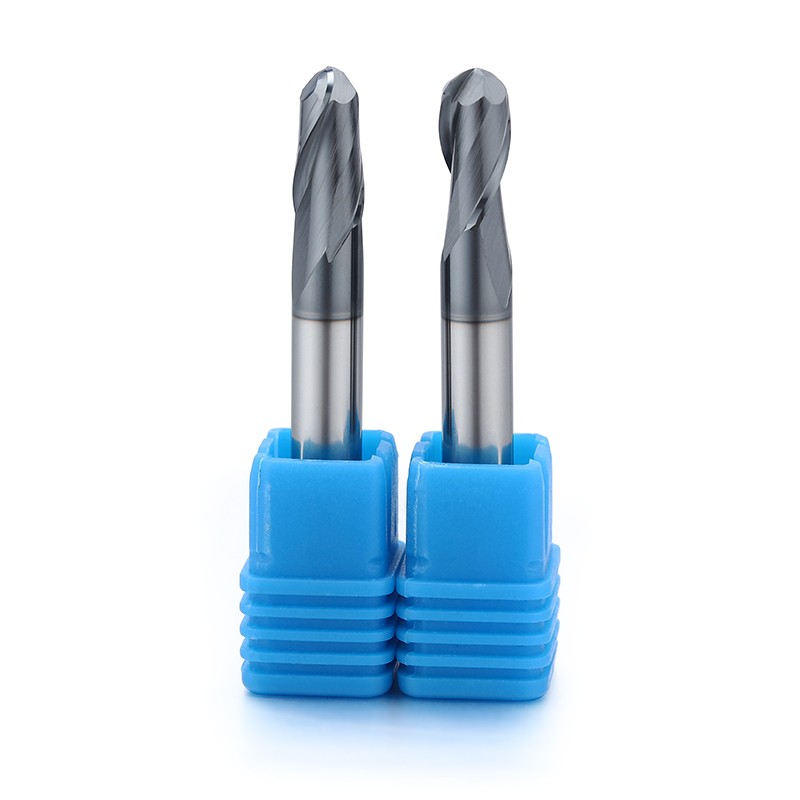
Designed for curved surfaces, cavities, transition profiles and three-dimensional contour machining.
Request Specifications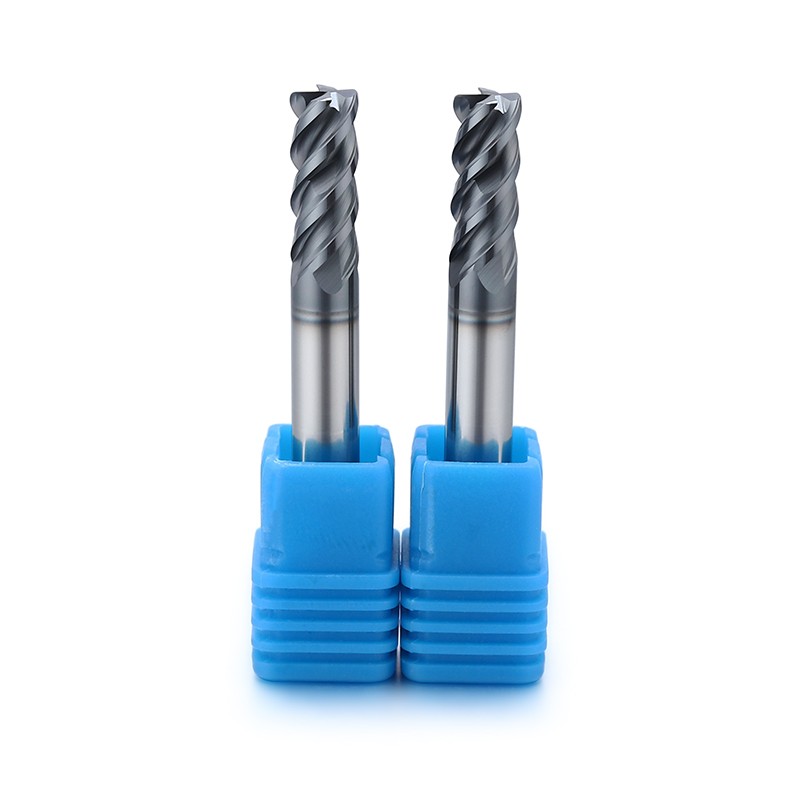
Combines flat-bottom machining with reinforced corner strength for pockets, shoulders, dynamic milling and contour operations.
Request SpecificationsStainless steel can generate concentrated cutting heat, work hardening, ductile chips and built-up edge. Dedicated cutting geometry is needed to maintain a clean cutting action.
Repeated rubbing rather than clean cutting can harden the local workpiece surface and accelerate edge wear.
The front small-core section provides additional flute space to evacuate chips and carry heat away from the cutting zone.
Positive rake geometry, controlled edge preparation and coating help reduce material adhesion and support more consistent surface quality.
The range supports common stainless steel operations from roughing and dynamic milling to controlled semi-finishing.
High-efficiency toolpaths with controlled radial engagement.
Stable material removal with improved chip evacuation.
Stainless steel walls, profiles and peripheral surfaces.
Controlled wall and flat-bottom shoulder machining.
Controlled stock removal before final finishing operations.
The carbide substrate, coating, dual-core geometry, unequal end teeth and controlled edge preparation work together to improve stability and chip evacuation.
Ultra-fine carbide with a grain size below 0.6 μm supports cutting-edge strength, wear resistance and consistent machining performance.
A 12% cobalt content provides a balance of substrate toughness, cutting-edge strength and resistance to impact during demanding milling operations.
The AP AlCrN coating provides high hardness, heat resistance and oxidation resistance at operating temperatures up to approximately 1200°C.
The front core section is approximately 52% for increased chip space, while the second section increases to approximately 70% for improved rigidity.
The positive rake geometry supports a clean cutting action and helps reduce rubbing, cutting resistance and local work hardening.
The 45° helix supports smooth engagement, stable chip flow and consistent cutting during roughing, side milling and dynamic machining.
The unequal end-tooth division helps interrupt repeated cutting forces, suppress vibration and improve stability during roughing and dynamic milling.
Fluid blasting helps remove microscopic burrs and stabilize the cutting edge, supporting smoother cutting and improved workpiece surface quality.
Automated rubber-bonded diamond polishing helps maintain consistent preparation across all cutting edges, with the value controlled within ±0.003 mm.
Walter five-axis precision grinding supports cutting-edge sharpness, dimensional accuracy and repeatable tool geometry for smoother machining.
Walter HELICHECK PLUS profile measurement, 150× optical inspection and 300× high-definition appearance inspection support consistent batch quality.
Ball nose and corner radius tools can be inspected and controlled to an R-profile accuracy within 3 μm for consistent contour and transition machining.
This range is mainly positioned for stainless steel. Selection should be based on the exact grade, strength, machining operation and machine rigidity.
The same cutting platform may also be evaluated for selected titanium alloys and mold steels. For applications focused mainly on those materials, use the corresponding ZHY titanium-alloy or mold-steel end mill range.
Standard tools and customized configurations can be supplied according to the workpiece grade, machining operation and purchasing requirements.
| Tool Type | Square / Ball Nose / Corner Radius |
|---|---|
| Carbide Grain Size | Below 0.6 μm |
| Cobalt Content | 12% |
| Coating | Balzers AP AlCrN Coating |
| Temperature Resistance | Up to Approximately 1200°C |
| Core Geometry | 52% / 70% Dual-Core Design |
| Rake Angle | 8° Positive Rake Angle |
| Helix Angle | 45° |
| End-Tooth Geometry | 88° / 92° Unequal Division |
| Edge Preparation | Fluid Blasting and Automated Diamond Polishing, Controlled Within ±0.003 mm |
| Ball / Corner Radius Accuracy | Within 3 μm |
| Main Operations | Roughing / Dynamic Milling / Side Milling / Semi-Finishing |
| Diameter and Length | Standard Sizes / Long Reach / Custom Dimensions |
| Marking | ZHY Logo / Customer Logo / Customer Model Number |
| Packaging | Standard Packaging / Private-Label Packaging |
ZHY supplies standard and customized solid carbide end mills for stainless steel to distributors, importers, CNC workshops and private-label cutting-tool brands.
Precision grinding, controlled edge preparation and multi-stage inspection support consistent geometry and repeatable batch delivery.
Send us the required tool type, diameter, flute length, overall length, workpiece grade, machining operation, quantity and packaging requirements. Our team will review the application and recommend a suitable configuration.
Request a Wholesale Quote